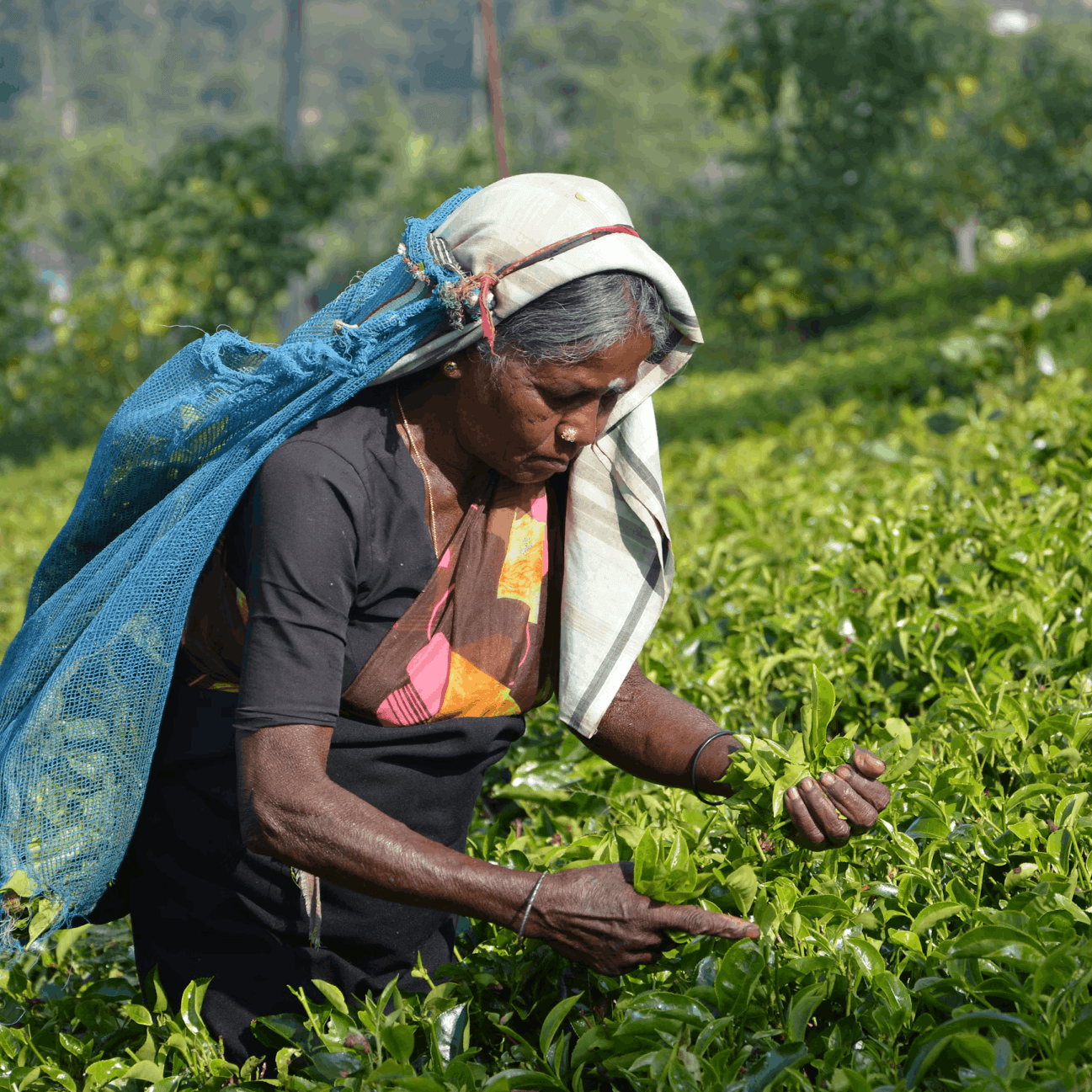
In 1869, a microscopic fungus arrived in the highlands of Ceylon and began quietly destroying every coffee plant on the island. Within fifteen years, one of the most profitable colonial economies in the world had collapsed completely. What replaced it was not planned, not obvious, and not inevitable. It was an accident that became the cup the world wakes up to every morning.
The Planter's Name Was James Taylor
He was a Scotsman, twenty-three years old, who arrived in Ceylon in 1852 with no particular qualifications beyond a willingness to work in the heat. He was given charge of a section of the Loolecondera estate in the Kandy district and told to manage the coffee. He managed it well. He also, in his spare time, began experimenting with something else.
In 1867 — two years before the fungus arrived, two years before anyone knew the coffee was doomed — James Taylor planted nineteen acres of tea.
He had no way of knowing he was building an empire. He was simply curious.
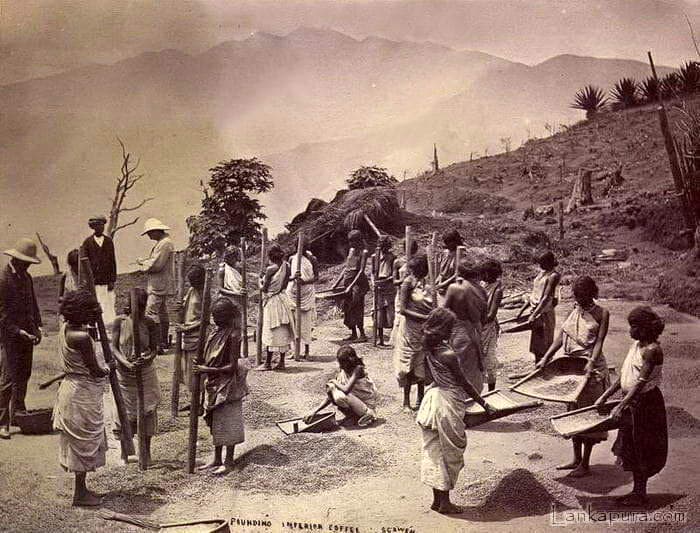
Women and children sorting coffee beans in the late 1800s
Photo: Lankapura.com
The World Ceylon Was
To understand what the blight destroyed, you need to understand what Ceylon had become by the mid-19th century.
The British had taken full control of the island in 1815, and within decades had transformed its central highlands into one of the most productive coffee-growing regions in the world. The ancient forests of the hill country were cleared. Roads were cut through terrain that had previously been accessible only on foot. A railway was constructed from Colombo up into the mountains — an engineering achievement of extraordinary difficulty — specifically to carry coffee down to the port.
The planters grew wealthy. Colombo grew into a proper colonial city. The economy of the entire island organized itself around the assumption that the highlands would grow coffee, and the ships would carry it to Britain, and the money would flow back.
By 1870, Ceylon was producing fifteen million pounds of coffee per year. The highland estates stretched as far as the eye could see. The system seemed permanent.
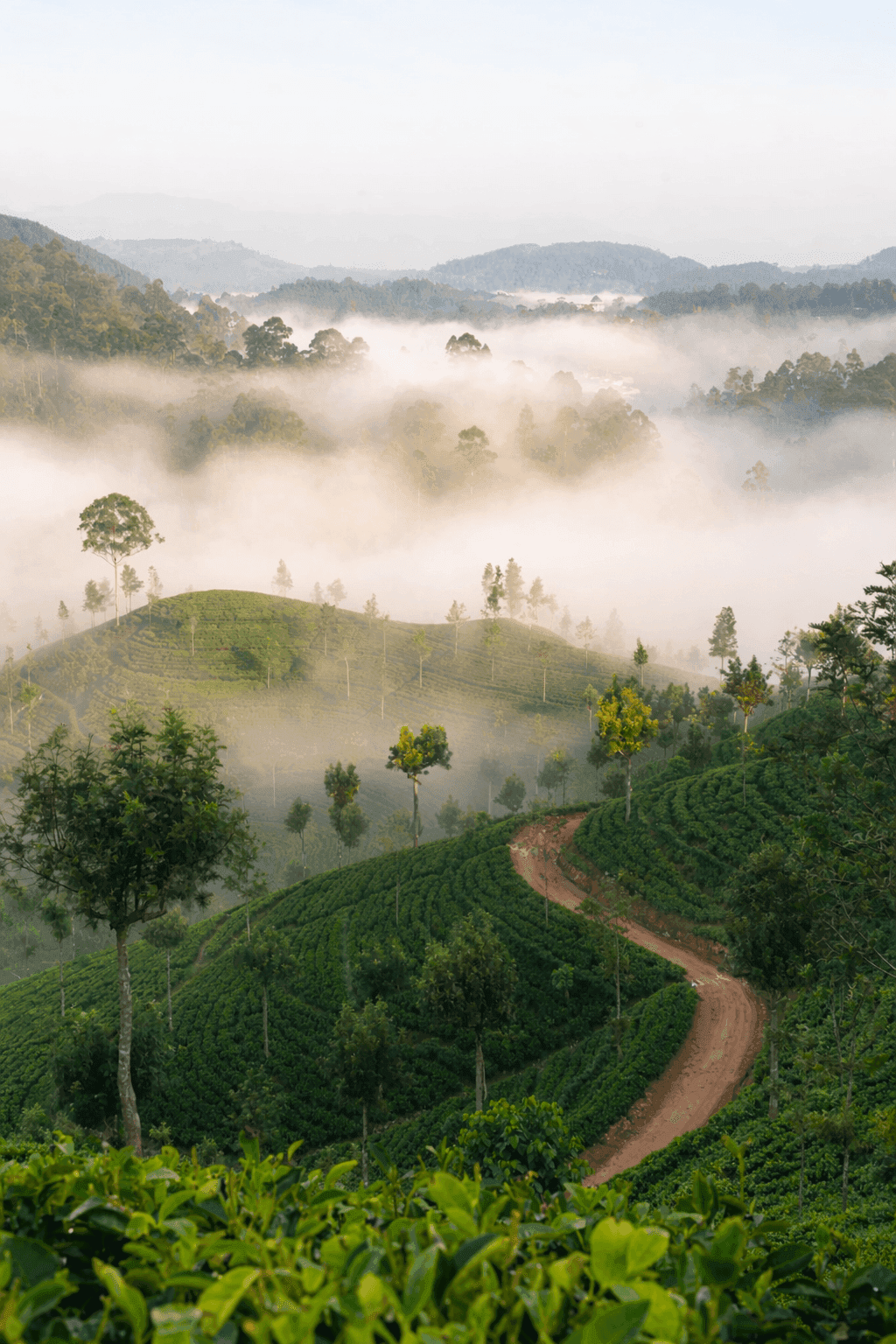
The tea estates that replaced the coffee — perhaps the most beautiful agricultural landscape on earth.
The Fungus
Hemileia vastatrix. Coffee leaf rust. It arrived in Ceylon in 1869 — nobody knows exactly how — and it moved through the highland estates with a speed and thoroughness that the planters initially refused to believe.
The fungus attacks the leaves of the coffee plant, coating them with a distinctive orange powder that interferes with photosynthesis. Infected plants stop producing. Without intervention — and in 1869 there was no effective intervention — they die.
The planters tried everything. They removed infected plants. They burned sections of estates. They wrote desperate letters to botanists in Kew Gardens in London asking for help. Nothing worked. The fungus spread from estate to estate, district to district, moving with the wind and the rain across a landscape that had been, inadvertently, designed to maximize its transmission — vast monocultures of a single vulnerable species, planted close together across an entire mountain range.
By 1878, coffee production had fallen by half. By 1885, it had effectively ceased. Estates that had been worth fortunes were abandoned. Planters went bankrupt. The railway that had been built to carry coffee down the mountain sat largely idle.
The entire economy of colonial Ceylon had been destroyed in sixteen years by something invisible to the naked eye.
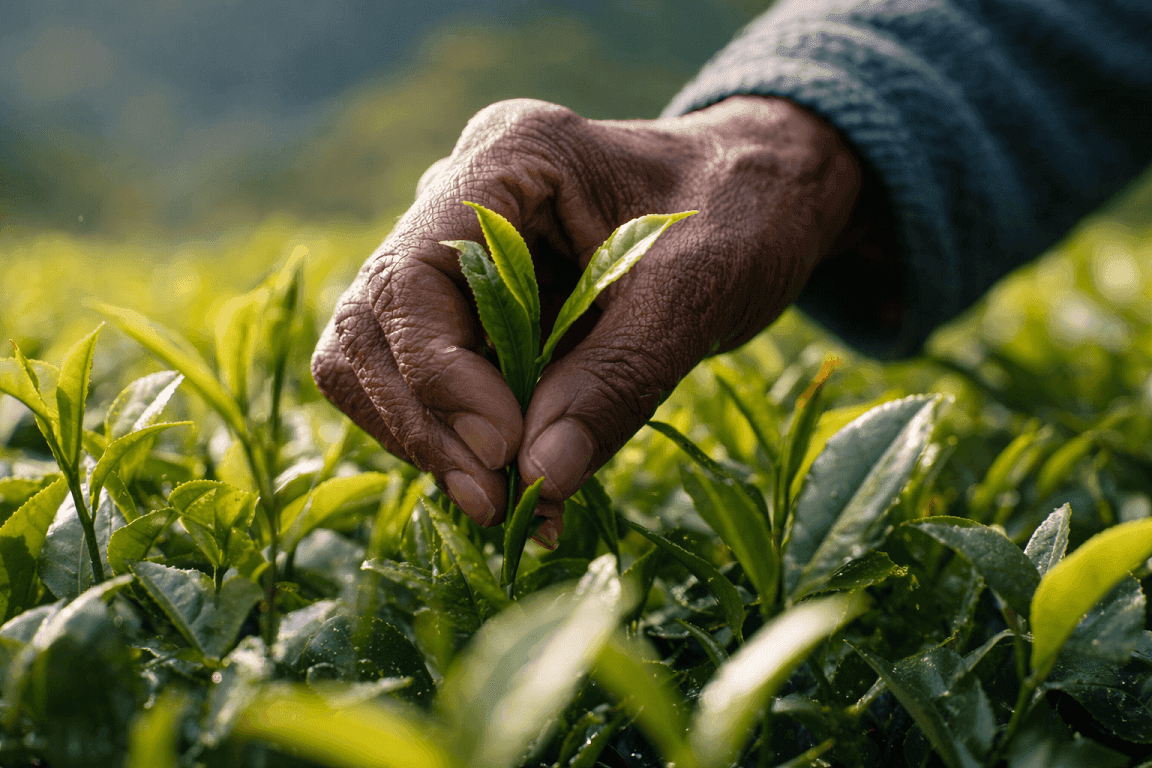
Tea pluckers at dawn — each hand-picked shoot becomes the finished cup.
The Pivot
What happened next was not an organized response. It was a collection of individual decisions made by people with few options, watched carefully by men in London who had money to lose and were willing to try almost anything to recover it.
Some planters tried cinchona — the bark used to make quinine. It worked briefly and then the market collapsed. Some tried cardamom, rubber, coconut. Most simply left.
But a handful looked at what James Taylor had been growing quietly on his nineteen acres at Loolecondera since 1867, and decided to scale it up.
Tea turned out to suit the Ceylon highlands almost perfectly. The altitude, the rainfall pattern, the temperature range, the acidic soil — conditions that had made the region good for coffee made it, it emerged, exceptional for tea.
The same railway that had been built for coffee could carry tea. The same labor networks, the same estate infrastructure, the same port facilities in Colombo — all of it transferred.
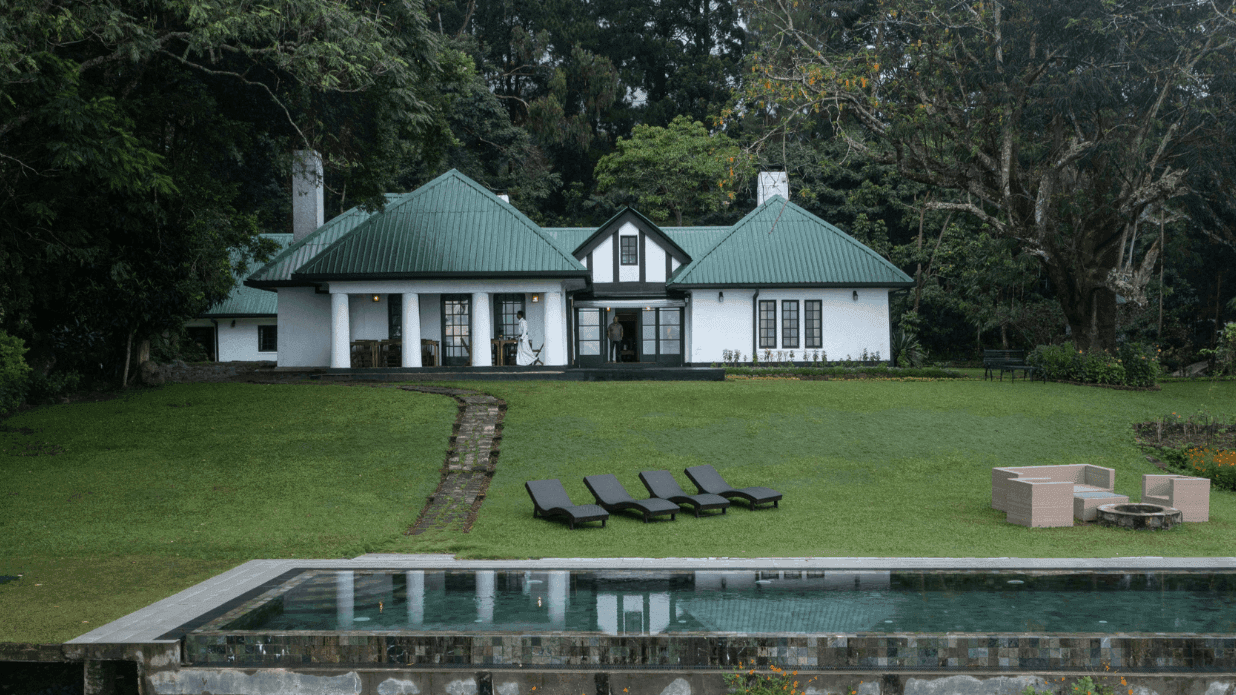
A planter's bungalow — converted for guests, the most atmospheric accommodation in Sri Lanka.
What Ceylon Tea Became
The British had been drinking tea long before Ceylon produced it — imported from China, then increasingly from India. What Ceylon tea did was arrive at exactly the moment when demand was outstripping supply, offer a product of exceptional quality, and benefit from one of the most effective marketing operations in colonial history.
Thomas Lipton — the Scottish grocer who would become the most recognized name in tea globally — began buying Ceylon estates in 1890. His genius was not agricultural but commercial: he understood that if he owned the estates, the ships, the packaging, and the retail outlets, he could sell tea at a price that ordinary British working families could afford. He put his own face on the packaging. He coined the phrase "from the garden to the teapot." He turned Ceylon tea from a commodity into a brand.
By the time Ceylon gained independence in 1948 and eventually became Sri Lanka in 1972, the tea industry employed over a million people and accounted for the majority of the country's export earnings. The name Ceylon was retained specifically for tea — Sri Lanka tea is still sold as Ceylon tea worldwide — because the brand had become too valuable to abandon along with the colonial name.
A fungus destroyed an economy. A Scotsman's curiosity and a grocer's ambition built an empire that outlasted the empire that created it.
How to Experience It
Where to go
The triangle between Kandy, Nuwara Eliya, and Ella covers the heart of tea country. Each town has a distinct character — Kandy cultural, Nuwara Eliya colonial and cool, Ella dramatic and walkable.
Factory visits
Most major estates offer guided factory tours. The best are working factories, not heritage displays — ask your accommodation which estates are currently in full production before you visit.
The train
The railway from Kandy to Ella — passing through Nuwara Eliya — is consistently described by travelers as one of the most beautiful train journeys in the world. Book the observation carriage seats in advance.
Best time
The hill country is pleasant year-round but at its most atmospheric between December and April when the air is clear and the light sharp. The monsoon months bring low cloud and rain that has its own beauty but limits visibility.
One thing to do
Walk through an estate at dawn before the mist lifts. Before the tour groups arrive. Before the day organizes itself into experiences. Just walk through the tea, which smells of nothing you can describe until you have smelled it, and think about the fungus that made all of this.
The Lesson the Fungus Left
There is a version of this story that is about colonial exploitation — the cleared forests, the imported Tamil labor from southern India brought to work the estates under conditions of extreme hardship, the wealth extracted and carried to Britain. That story is true and should not be forgotten.
There is also a version that is about resilience — the capacity of a landscape and a people to absorb total economic catastrophe and rebuild into something entirely new within a generation. That story is also true.
What the hill country holds today is both versions simultaneously — the beauty and the cost of it, the achievement and the debt of it, in the same green terraced hillside, in the same cup of tea.
James Taylor died on his estate in 1892, never having left Ceylon, never having become wealthy. He is buried in Kandy. The industry he accidentally founded employs over a million people and is worth billions of dollars annually.
He planted nineteen acres because he was curious. Sometimes that is enough.