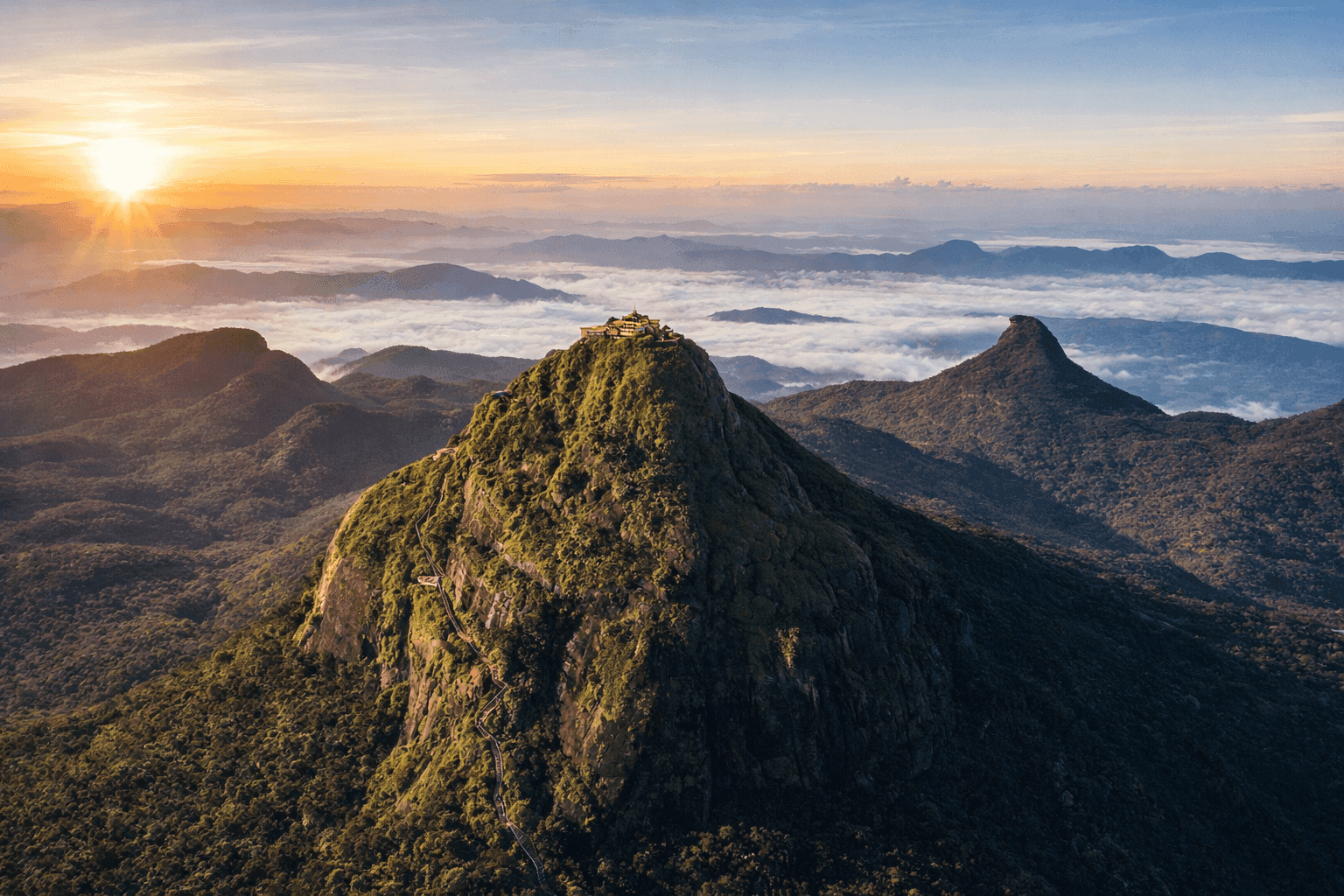
At 2,243 metres above sea level, at the summit of a mountain in the heart of Sri Lanka, there is a footprint in the rock. Buddhists, Hindus, Christians, and Muslims have been climbing to see it for over a thousand years. Each of them believes something different about whose foot made it. None of them has stopped climbing.
The Path Begins in Darkness
Every pilgrim who has made the ascent to Sri Pada — Adam's Peak — will tell you the same thing. You start climbing at midnight, or two in the morning, or three. You climb in the dark because the goal is to reach the summit before dawn. The steps are steep and uneven. The air gets cold. Your legs begin to ache somewhere around the four thousandth step.
And then the sun rises, and you understand why people have been doing this for a thousand years.
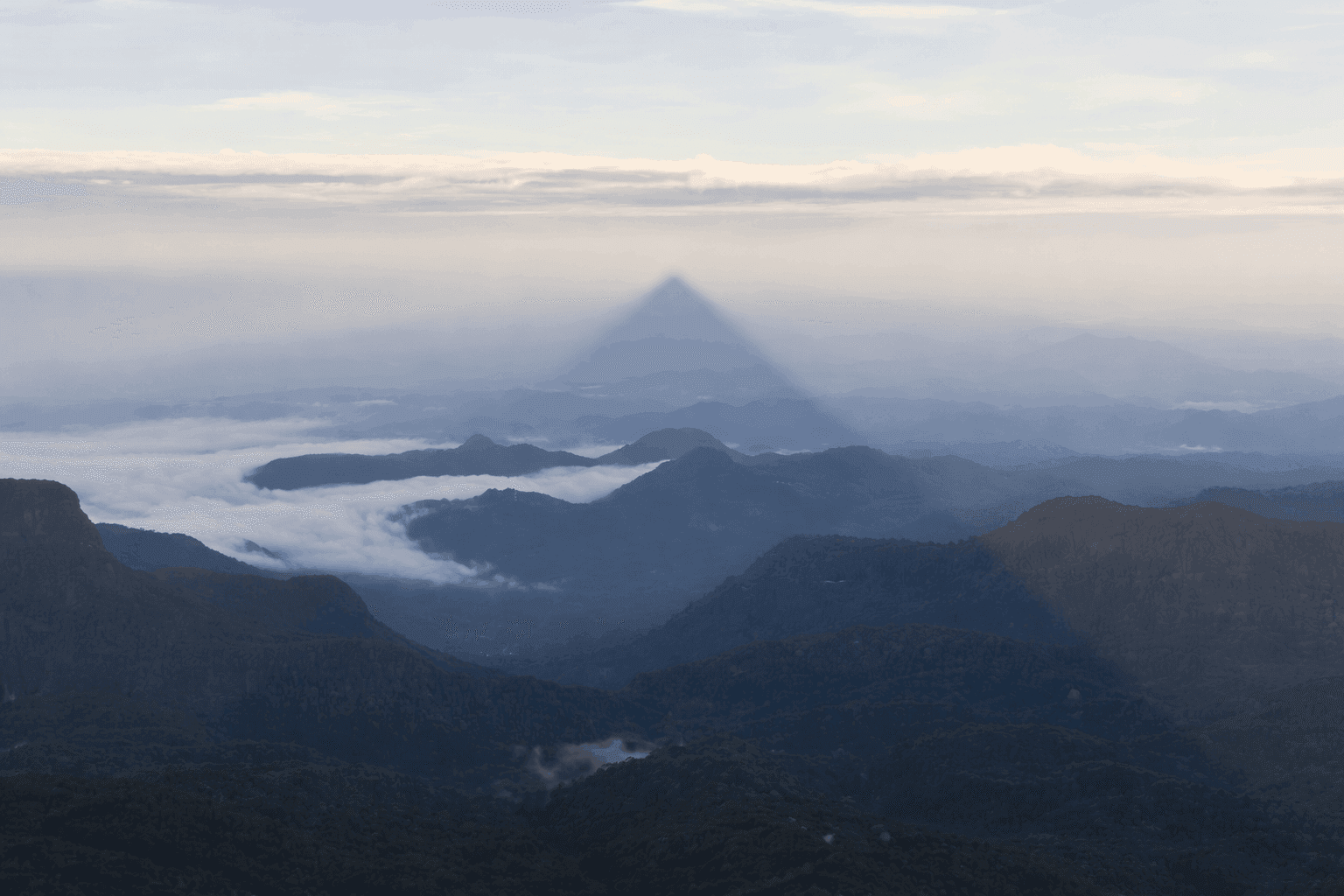
The triangular shadow of Sri Pada projected across the clouds below — visible only at sunrise.
A Mountain With Four Names
The summit is called Sri Pada by Buddhists — the Sacred Footprint — and they believe it bears the left footprint of the Buddha, left during one of his three legendary visits to the island.
Hindus call it Sivan Adi Padham — the foot of Shiva — and believe the print was made by the god himself as he danced creation into existence.
Christians and Muslims call it Adam's Peak, believing that when Adam was cast out of paradise, this was where he first set foot on earth — and that he stood on one foot for a thousand years in penance, which is why the print is so deep.
Same rock. Same indentation. Four explanations, each thousands of years old, each held with complete sincerity by millions of people.
What makes Sri Pada singular is not just that multiple religions venerate it — it is that they always have, side by side, without meaningful conflict. The path to the summit is shared. The summit itself is shared. In a world where religious sites are routinely contested and fought over, this mountain has been quietly, stubbornly, peacefully shared for longer than most nations have existed.
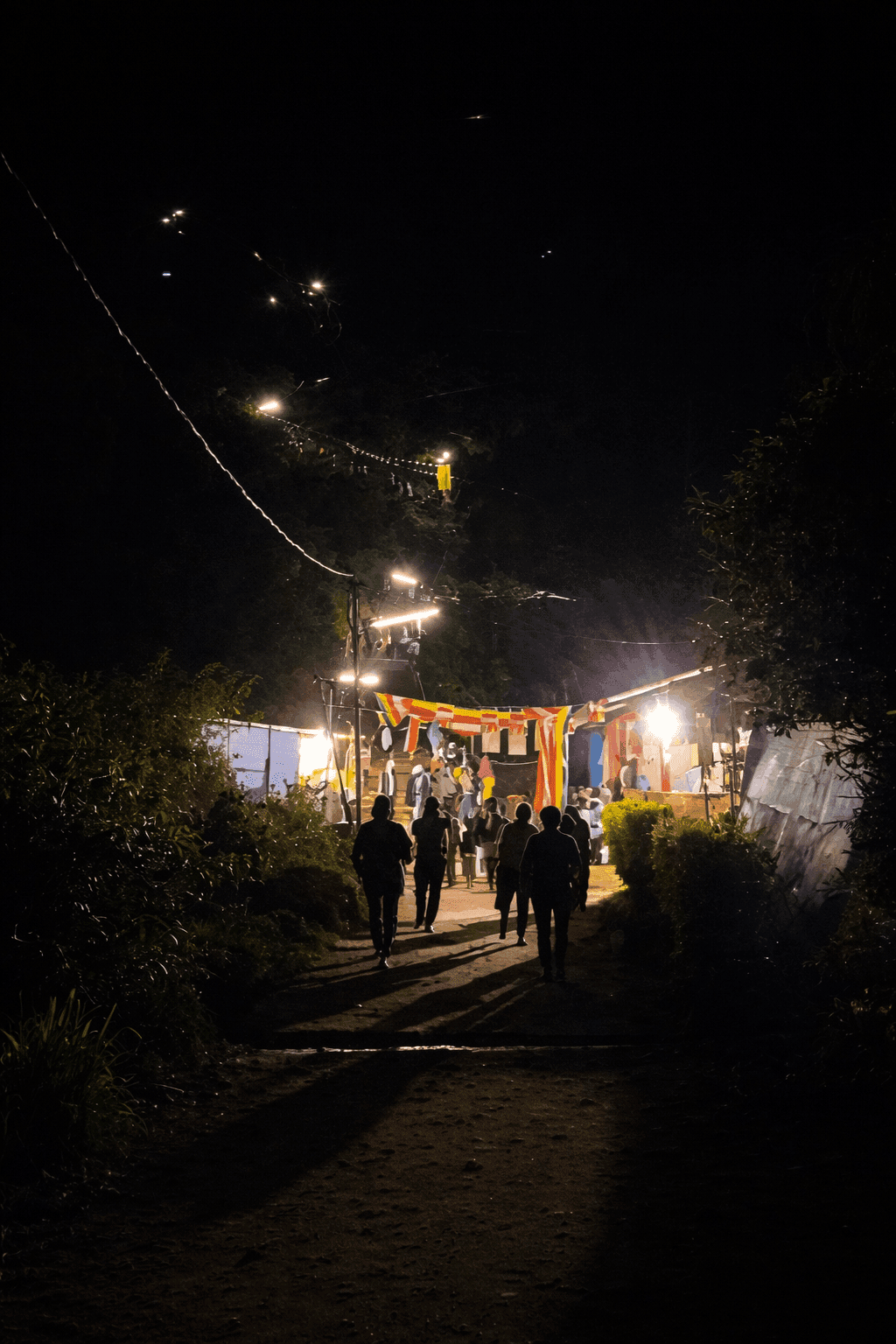
Thousands of pilgrims climb through the darkness, torches and string lights guiding the way upward.
The Climb Itself
The most popular ascent route starts from the town of Dalhousie in the hill country, roughly five kilometres of steps cut into the mountainside. The path is ancient but the infrastructure is modern enough — handrails for most of the steeper sections, tea stalls open through the night during pilgrimage season, strings of bare bulbs lighting the route in the darkness.
It takes between two and four hours depending on your pace and the crowds. During peak pilgrimage season — December through May, when the weather is dry and the path is open — the steps can be packed with thousands of people moving upward together, a slow river of torchlight and breath in the cold air.
The atmosphere is unlike any other mountain climb in the world. This is not trekking. It is not sport. The majority of people around you are pilgrims — families with small children, elderly men and women who have made this climb dozens of times before, young monks in saffron robes moving with quiet efficiency through the crowds.
You are a guest in someone else's act of faith. Most foreign visitors find this not alienating but grounding — a reminder that the mountain was here long before tourism and will be here long after.
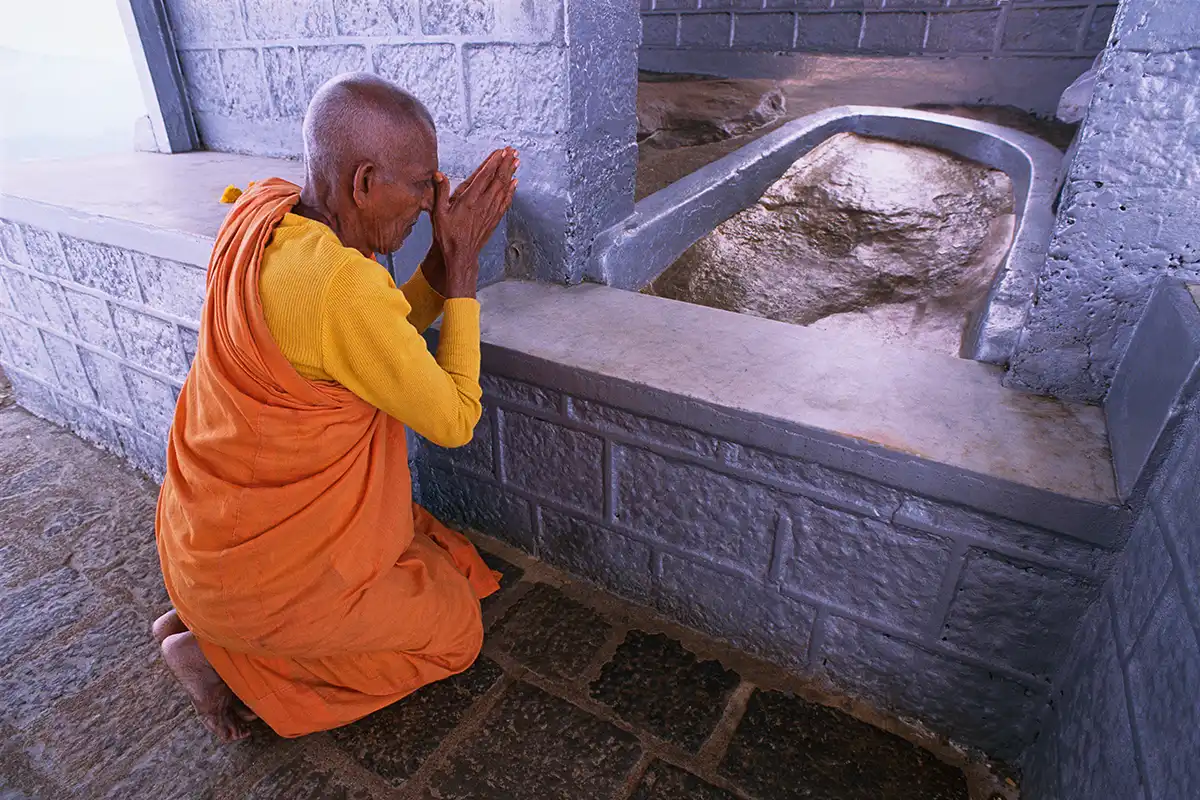
The summit shrine at dawn — prayer flags, offerings, and the ever-present monks.
The Summit
The summit platform is small — perhaps thirty metres across. At its center is the shrine that houses the footprint, covered by a roof and surrounded by prayer flags and offerings. Bells ring constantly as pilgrims complete their ascent. A monk is always present.
When the sun rises, the mountain does something that no description fully prepares you for. The shadow of the peak is projected westward across the clouds below — a perfect triangular silhouette that shrinks as the sun climbs, disappearing within minutes of first light. Pilgrims who reach the summit in time for this watch in complete silence. Then the bells begin again.
The descent is faster and, in its own way, harder on the knees. Most people are back at Dalhousie by midmorning. The tea at the stalls on the way down tastes better than any tea you have ever had.
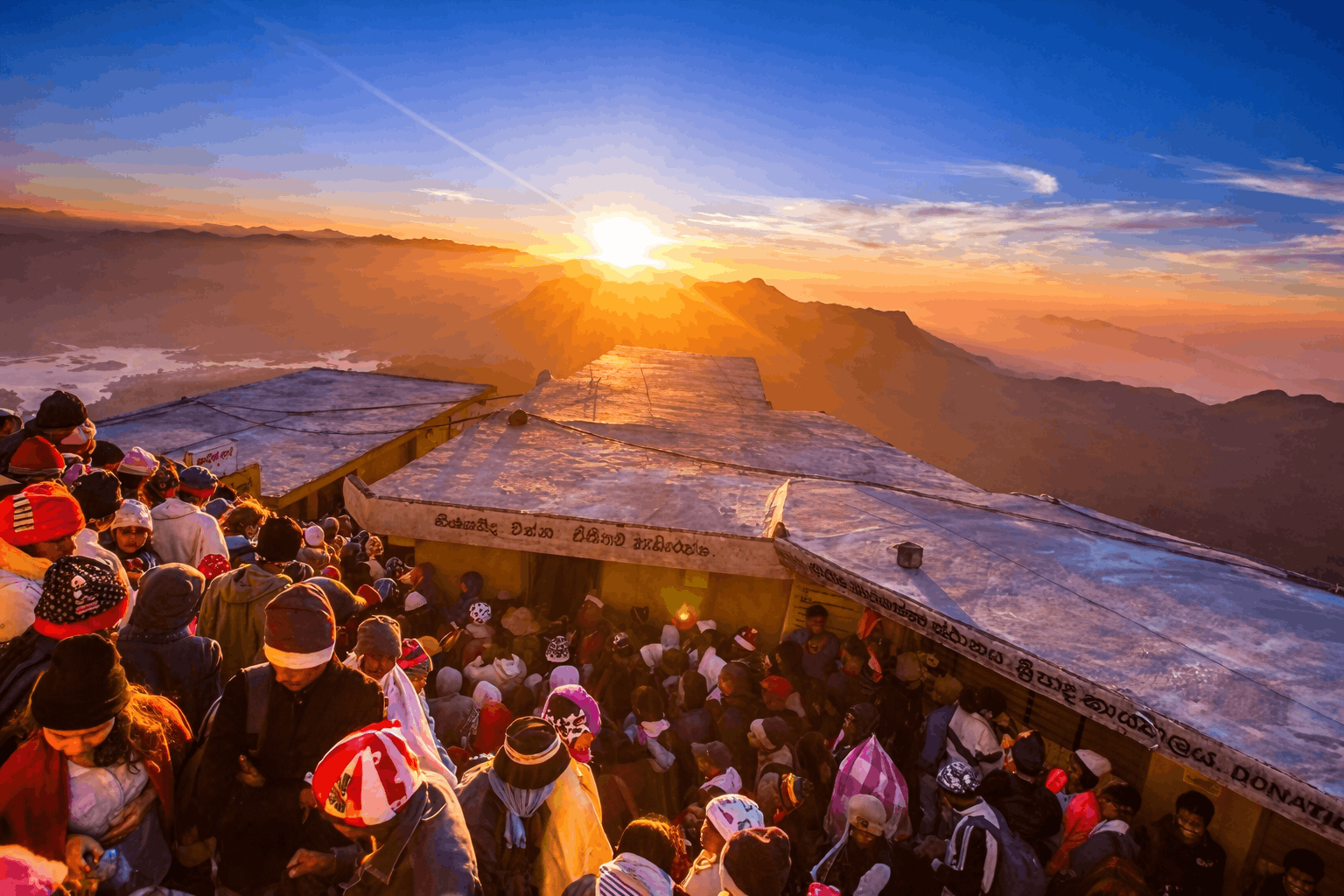
Pilgrims of different faiths ascending together — saffron robes, families, morning light.
The History of the Climb
The earliest recorded pilgrimages to Sri Pada date to the 1st century BC. The Chinese traveller Fa Hien documented the climb in 400 AD. Ibn Battuta, the great Moroccan explorer, described his ascent in the 14th century — noting that he climbed it four times. Marco Polo wrote about it. Every significant traveller who passed through the Indian Ocean in the medieval period seems to have made the detour to climb this mountain.
What drew them — Buddhist, Hindu, Muslim, Christian, curious — was the same thing that draws people today. Not the footprint specifically. The mountain itself. The sense, which begins on the path and becomes overwhelming at the summit, that you are standing somewhere that has mattered to human beings for a very long time, for reasons that go beyond any single faith's explanation.
Some places on earth are simply sacred. Sri Pada is one of them.
How to Experience It
When to climb
The pilgrimage season runs from December to May when the path is open and the weather cooperative. January and February offer the clearest skies. Outside season the path is officially closed and the summit is frequently cloud-covered.
Start time
Leave Dalhousie no later than 2am to reach the summit comfortably before sunrise. Most guesthouses in Dalhousie will wake you at 1:30am if you ask.
What to wear
Temperatures at the summit can drop to 5–10°C even when the valley below is warm. Bring a proper layer, not just a light jacket. Wear shoes with grip — the steps are worn smooth in places.
What to carry
Water, a headlamp with fresh batteries, a small snack. Everything else is available on the mountain.
Where to stay
Dalhousie is the base for the climb. Hatton or Nuwara Eliya offer more comfortable accommodation with a short drive to the trailhead. For a fuller experience, spend a day in the surrounding hill country tea estates before the climb — the landscape earns as much time as the mountain.
One important note
Dress and behave respectfully throughout. You are on a pilgrim path, not a hiking trail. Brief, quiet moments of observation are welcome; loud or intrusive behavior is not.
What Stays With You
Most people who climb Sri Pada do not come away talking about the footprint. They come away talking about the climb itself — the darkness, the cold, the thousands of strangers moving upward in the same direction for different reasons, the silence that falls across the summit in the minutes before the sun appears.
There is a moment, just before dawn, when the wind drops and the bells stop and everyone on that small platform is looking in the same direction. Buddhist, Hindu, Christian, Muslim, traveller from the other side of the world. All of them waiting for the same light.
It is, by any definition, a religious experience. Even for those who have no religion.