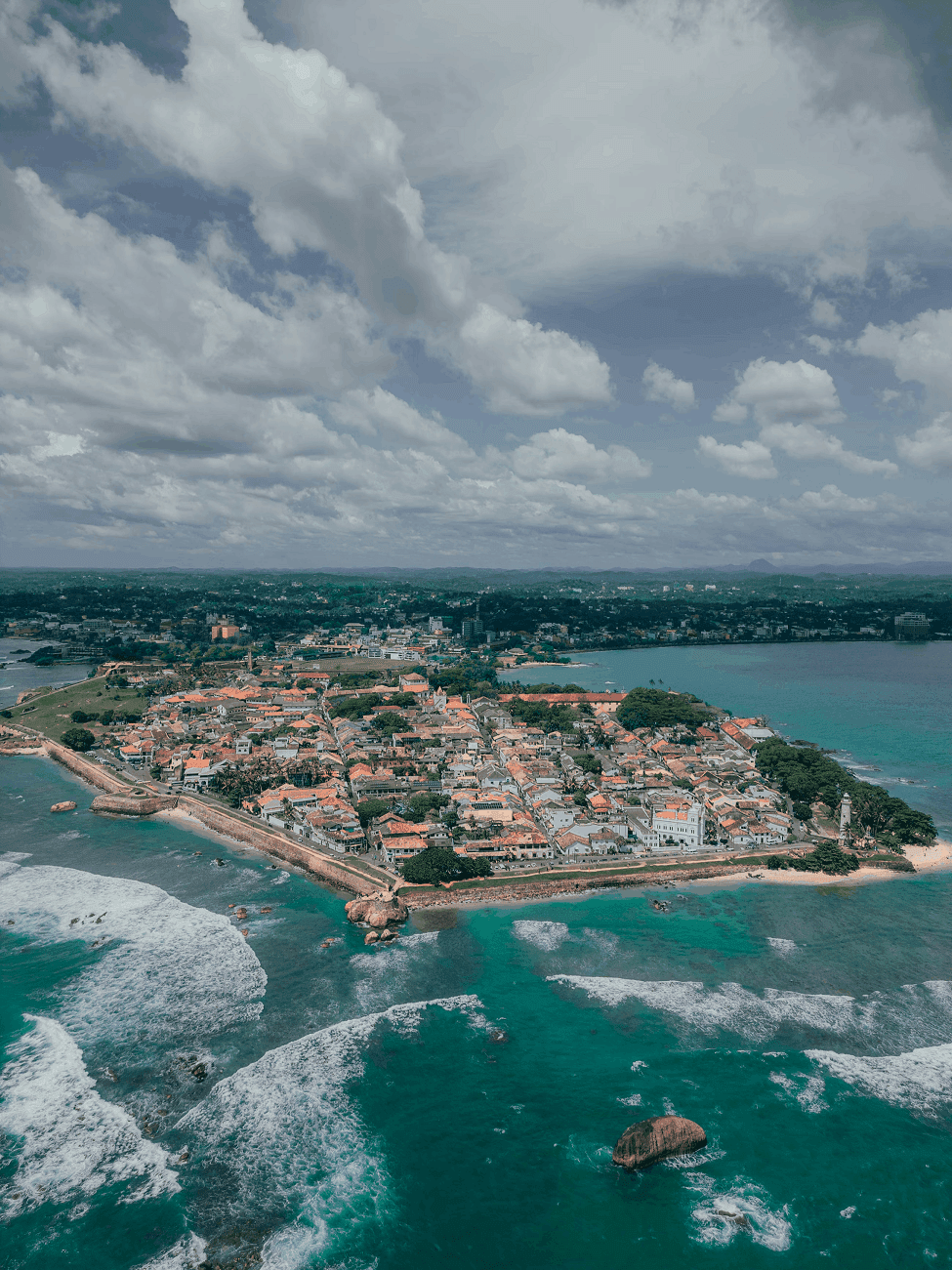
Between 1505 and 1948, three separate European empires arrived on this small island in the Indian Ocean, each convinced they were the first to understand its value. The Portuguese came for spices. The Dutch came for trade. The British came for everything. Each stayed long enough to leave something permanent. None of them left.
Stand in Galle
Stand in the fort city of Galle on the island's southern tip and you can see all three at once.
The walls you are standing on were built by the Portuguese in 1588 and rebuilt by the Dutch in 1663. The lighthouse inside the fort was built by the British in 1848. The church across the street was built by the Dutch Reformed Church, converted to Anglican use by the British, and is now attended by Sri Lankan Christians whose ancestors converted under Portuguese missionaries five centuries ago.
The coffee you are drinking in the café beside the old warehouse came from a culture of café society the Dutch established. The café itself is in a building whose architecture is neither European nor Sri Lankan but something that emerged from two centuries of both traditions occupying the same walls.
This is what 443 years of consecutive colonial occupation looks like. Not erasure. Accumulation.
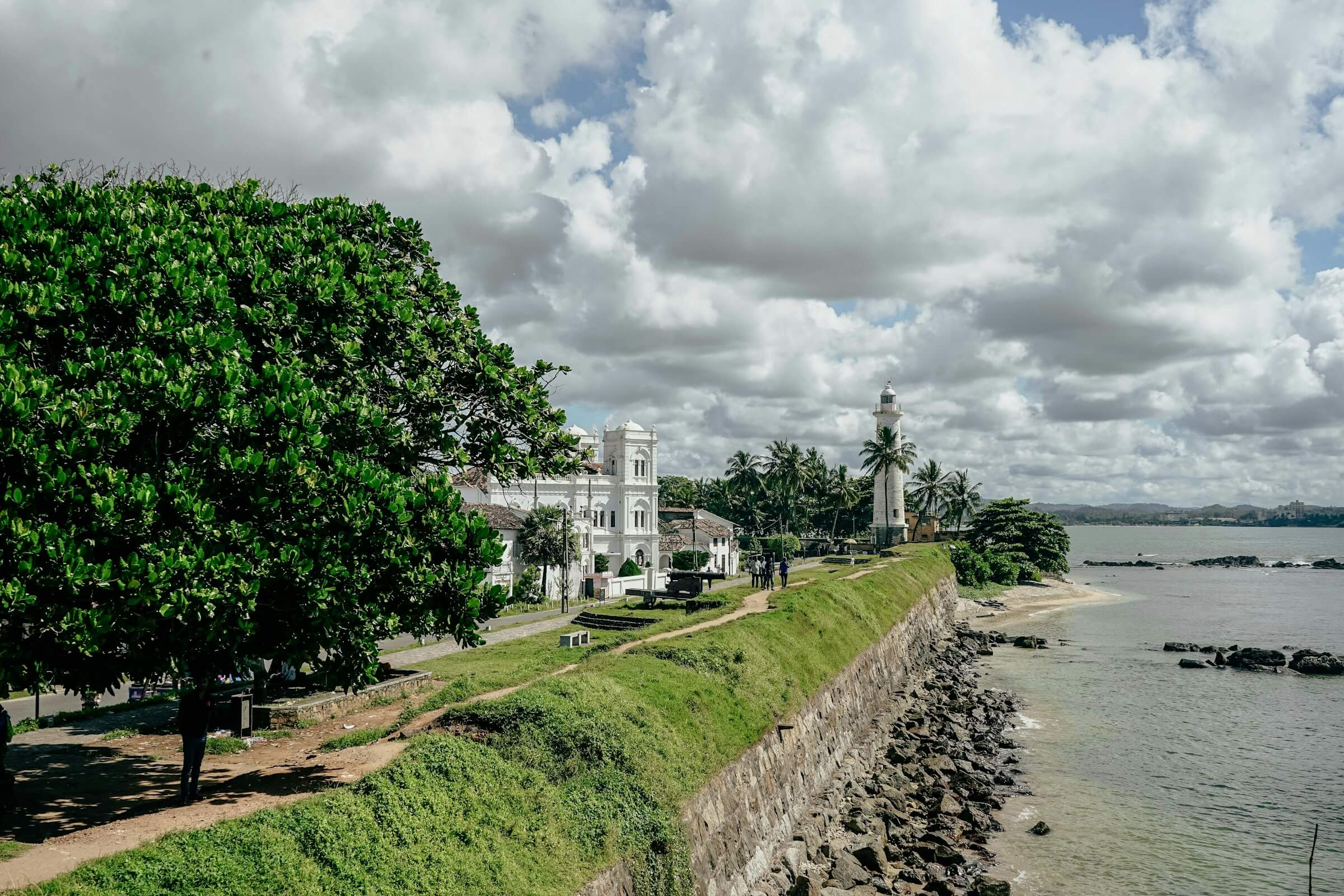
Galle Fort walls — Portuguese foundations, rebuilt by the Dutch, still standing after five centuries.
The Portuguese: Faith and Fortification (1505–1658)
The Portuguese did not come to Ceylon looking for it. They were looking for the spice trade routes of the Indian Ocean, and Ceylon — sitting directly across the shipping lanes between the Arabian Sea and the Bay of Bengal — kept appearing in their way.
The first Portuguese ships arrived in 1505 under Lourenço de Almeida, who established a trading relationship with the Kotte kingdom on the western coast. Within decades this had become something more aggressive — a systematic attempt to control the island's coastal regions, its cinnamon trade, and the religious identity of its population.
They built forts along the western and southern coasts. They built churches wherever they built forts. They brought Franciscan missionaries who converted tens of thousands of coastal Sri Lankans to Catholicism, often under considerable pressure. They attempted — with mixed results — to control the Sacred Tooth Relic in Kandy, understanding intuitively that whoever held the Tooth held a claim on the island's loyalty.
They failed to conquer the interior. The Kandyan Kingdom in the highlands resisted every Portuguese incursion for over a century, using the terrain with a tactical brilliance that frustrated every European military advantage. The Portuguese held the coasts. The Kandyans held the mountains. The cinnamon grew in both.
What the Portuguese left behind is still visible and still living. The Sri Lankan Catholic community — concentrated on the western coast around Negombo and in the south — traces its faith directly to Portuguese missionaries. Family names like Fernando, Perera, Silva, and De Silva are among the most common surnames in Sri Lanka today. The lace-making tradition of the west coast arrived with the Portuguese. So did the technique of cooking in vinegar that became part of Sri Lankan cuisine.
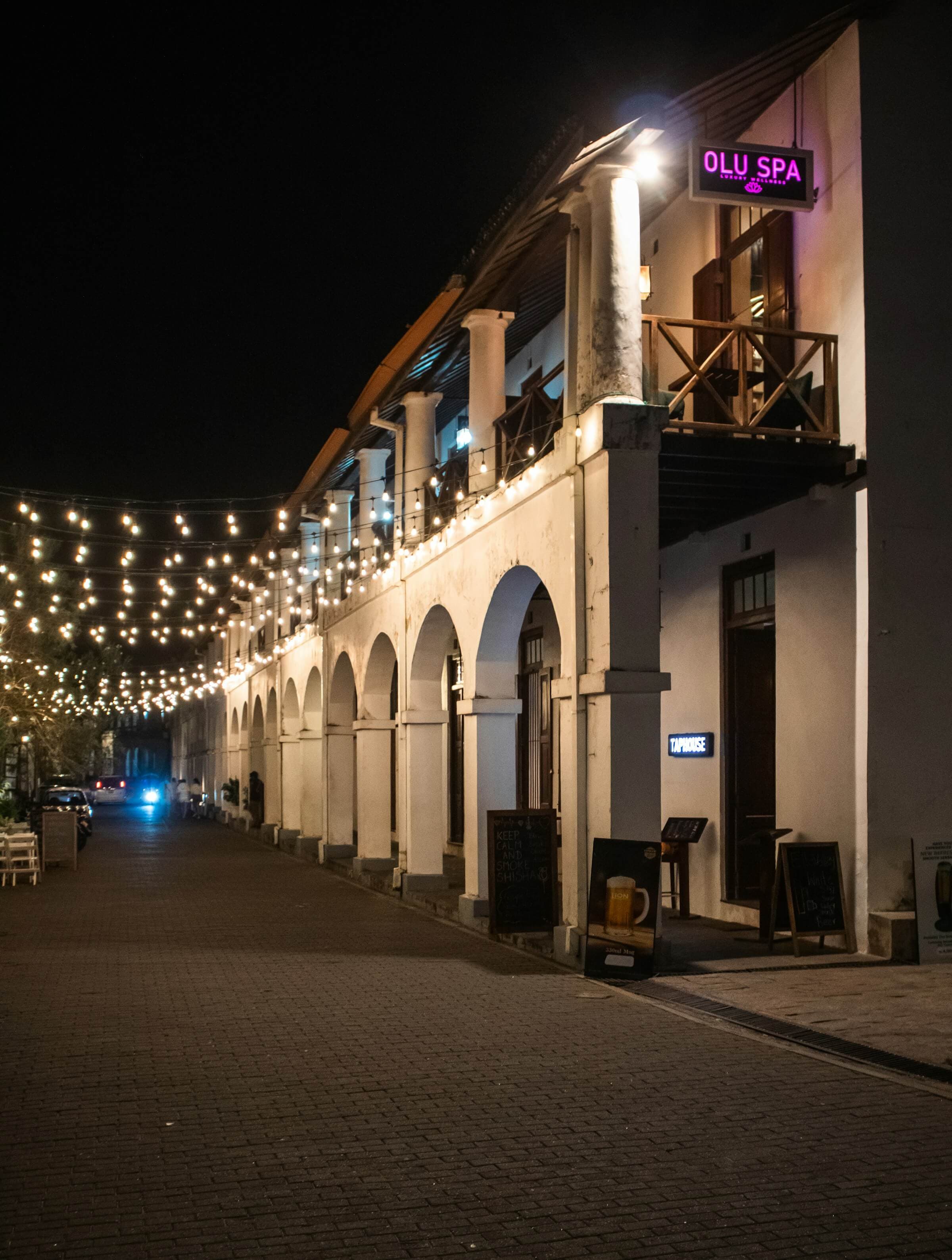
Dutch colonial architecture — the white buildings, deep verandas, and courtyards that defined Galle.
The Dutch: Commerce and Canal (1658–1796)
The Dutch arrived not as conquerors in the conventional sense but as commercial partners — specifically as the partners the Kandyan king Rajasinha II invited to help him expel the Portuguese.
The arrangement worked militarily. By 1658 the Portuguese had been driven from every coastal stronghold. The Dutch then declined to honor the terms of the arrangement, which had promised them only trading rights, and instead occupied the coastal territories themselves. Rajasinha II, having used the Dutch to remove the Portuguese, found himself with a different European power on his coasts and no army left to remove them.
The Dutch were less interested in souls than the Portuguese had been. They were interested in systems. They rebuilt the Portuguese forts more substantially — Galle Fort as it stands today is overwhelmingly a Dutch construction, with the Portuguese foundations buried underneath. They built canals along the western coast that drained the lowland wetlands and connected the coastal towns — some of these canals are still navigable today. They established a legal system based on Roman-Dutch law that was so thoroughly embedded in Sri Lankan jurisprudence that it forms part of the island's legal framework to this day.
They also brought a different kind of Christianity — the Dutch Reformed Church — and built the spare, white, high-windowed churches that still stand in Galle and Colombo, architecturally the opposite of the ornate Portuguese Catholic churches but equally permanent.
The Dutch period produced the most architecturally coherent legacy of the three colonial powers. The Dutch colonial buildings in Galle Fort — thick walls, interior courtyards, deep verandas designed to manage tropical heat — established a vernacular that Sri Lankan architecture has been in conversation with ever since.
Colombo colonial architecture — the grand buildings the British left behind.
The British: Railways and Reinvention (1796–1948)
The British acquired Ceylon almost accidentally, as part of the broader reorganization of Indian Ocean power that followed the Napoleonic Wars in Europe. The Dutch, allied with Napoleon, had their colonies seized by the British in 1796. Ceylon was one of them.
What began as a strategic acquisition became, over the following century, the most transformative period in the island's modern history.
The British did what the Portuguese and Dutch had never managed — they conquered the Kandyan Kingdom. In 1815, through a combination of military pressure and internal Kandyan political division, the last Kandyan king was deposed and the entire island came under British control for the first time in its history. The Portuguese and Dutch had held the coasts. The British held everything.
What followed was systematic modernization of a specifically colonial kind. The forests of the highlands were cleared for coffee and then tea plantations. A railway was built from Colombo into the mountains — a feat of Victorian engineering that is still in daily use. Roads were cut across terrain that had previously been passable only on foot. Colombo was transformed into a proper colonial administrative city with grand public buildings, a functioning port, and an English-educated professional class.
The British also brought English as the language of administration, law, and higher education — a legacy so durable that English remains an official language of Sri Lanka today and the entire professional infrastructure of the country operates in it. The legal system, the civil service structure, the university system, the form of parliamentary democracy — all of it was built by the British and all of it remained after they left.
They also brought the hill station of Nuwara Eliya — an act of almost comic colonial homesickness, a mock-English town complete with a golf course and a race track, sitting at nearly two thousand metres in the Sri Lankan highlands, where the temperature was cool enough to remind planters of home. It is still there, still functioning, still faintly absurd and entirely charming.
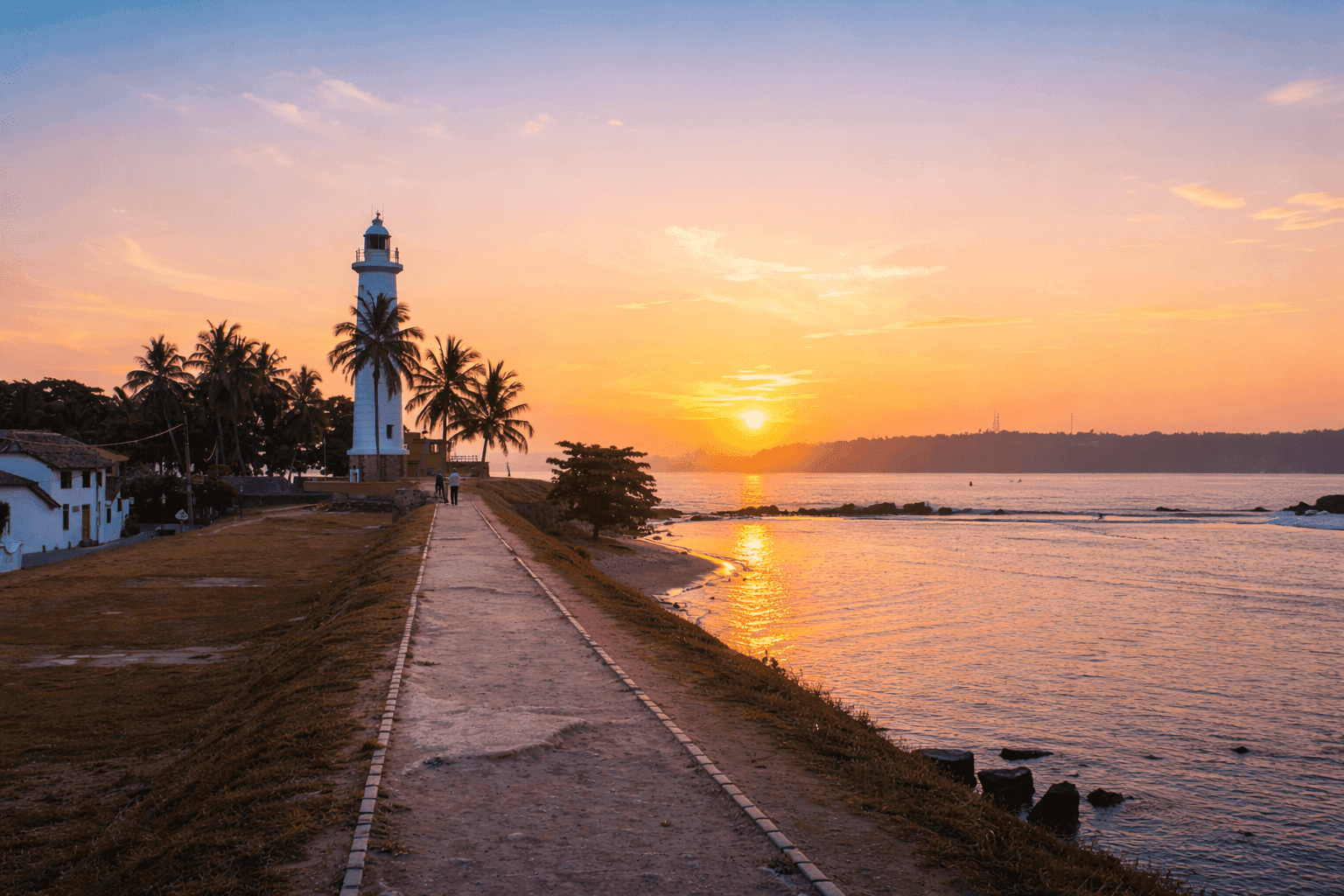
Galle Fort at golden hour — all three colonial layers visible in a single frame.
What Three Occupations Left Behind
The remarkable thing about Sri Lanka's colonial history is not that three European powers occupied it consecutively. Many countries have been colonized. What is unusual is the degree to which each layer of occupation added to rather than replacing what came before — and the degree to which Sri Lankan culture absorbed, adapted, and ultimately domesticated everything it was given.
The Portuguese brought Catholicism. Sri Lankan Catholics developed a form of worship that incorporated Buddhist festival aesthetics into Catholic ceremony — the result looks like nothing you would see in Portugal.
The Dutch brought Roman-Dutch law and canal engineering. Both were adopted so thoroughly that their origins became invisible — Sri Lankans who use the legal system or travel the western coast waterways rarely think of them as Dutch imports.
The British brought English, railways, tea, cricket, and parliamentary democracy. Cricket is now the national passion. Tea is the national identity. English is the language of aspiration. The railways are loved with an almost sentimental intensity that the British themselves have largely abandoned toward their own rail network.
Each colonizer came to take. Each left something that became, across generations, genuinely Sri Lankan. That is not a defense of colonialism — the violence, the dispossession, the extraction of wealth, and the importation of Tamil laborers under conditions of near-servitude for the tea estates are permanent stains on this history. It is simply an observation about the particular resilience and absorptive capacity of this island's culture.
It took three empires and four and a half centuries. The island is still here. The empires are not.
How to Experience It
Galle Fort
The single best place to read all three colonial layers simultaneously. Walk the walls at dawn before the tourists arrive. The fort is a living neighborhood — people live and work inside it — which makes it something far more interesting than a heritage site. Stay inside the fort walls for at least one night.
Colombo
Holds the British layer most legibly. The Pettah market district, the old parliament building, the Galle Face Green, the colonial-era hotels — the city is a working palimpsest of what the British built and what Sri Lanka has done with it since 1948.
Negombo
The heart of Portuguese Catholic Sri Lanka — the fishing town where the Catholic faith has been unbroken for five centuries, where the churches are older than America, and where the boats still go out at night the way they did when the Portuguese first arrived.
Hill Country
Carries the British layer most completely — the tea estates, the railways, Nuwara Eliya, the estate bungalows. But look carefully and the earlier layers are there too: the cinnamon that the Portuguese and Dutch both fought to control still grows in the lowland gardens of the west.
The Island That Absorbed Everything
There is a particular kind of cultural confidence that allows a place to take what is imposed on it and make it its own without losing itself in the process. Sri Lanka has that confidence in unusual abundance.
The Portuguese tried to replace Buddhism with Catholicism. Buddhism survived and the Catholics became Sri Lankan. The Dutch tried to impose commercial rationalism on an ancient civilization. The civilization absorbed the canals and the courthouses and kept its temples. The British tried to remake the island in their own image, which is what empires always try to do. They left behind railways and cricket and English and tea — all of which Sri Lanka has made more its own than Britain's.
Three flags flew over this island in four hundred years. All three came down. The island is still the island.
Stand in Galle Fort at sunset, with the Indian Ocean on three sides and five centuries of layered history under your feet, and that fact becomes not just intellectually understood but physically felt. This is what it looks like when a place survives everything it was given. It looks like this.