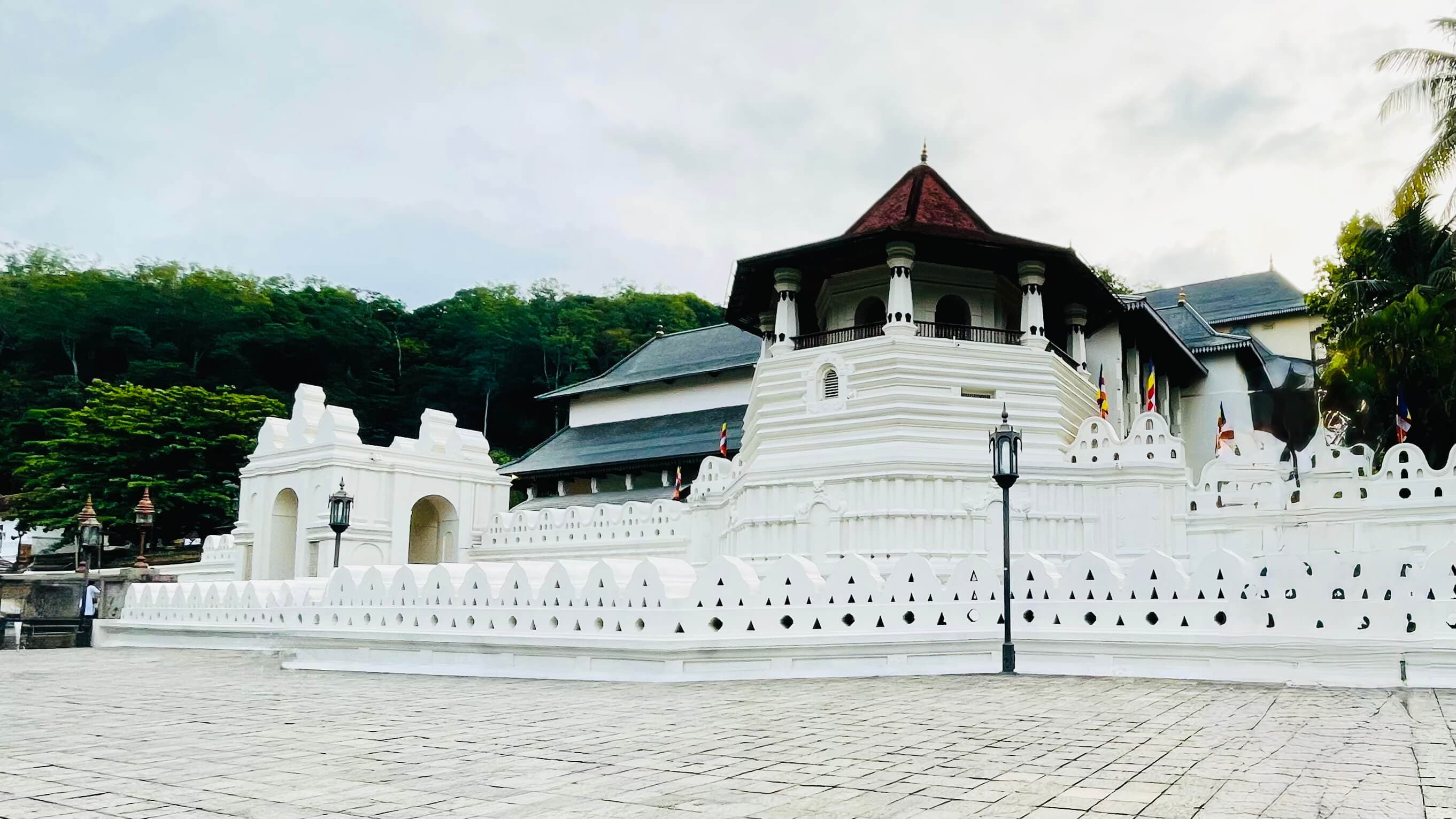
For two thousand years, a single relic has sat at the center of Sri Lankan civilization — not as a museum piece, not as a symbol, but as a living presence that kings have fought wars over, colonizers have tried to destroy, and millions of ordinary people visit every single day.
What the Tooth Is
According to the Mahavamsa — the ancient Pali chronicle of Sri Lankan history — when the Buddha died in 543 BC, his left canine tooth was recovered from the funeral pyre. For centuries it was kept in India, venerated, fought over, and finally smuggled out in the 4th century AD by a princess named Hemamali, who hid it in her hair to protect it from enemies, and carried it across the ocean to Sri Lanka.
It arrived on an island that would never be the same.
Within decades of its arrival, a doctrine had formed that would shape every dynasty that followed: whoever holds the Tooth holds the right to rule Sri Lanka. The relic was not merely a religious object. It was the physical embodiment of sovereignty itself.
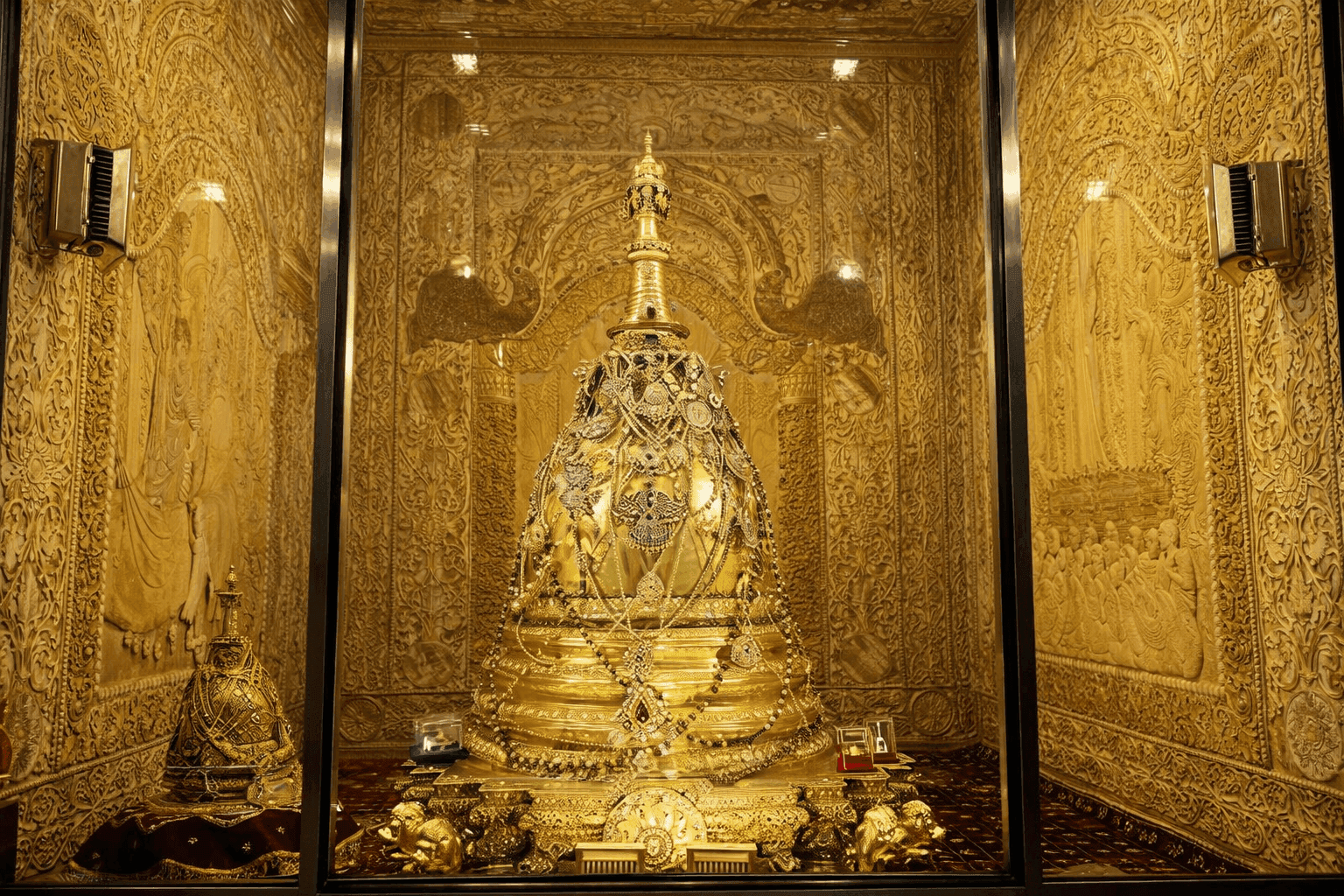
The inner shrine holds seven nested caskets, each more ornate than the last.
The Temple That Grew Around It
The Sri Dalada Maligawa — the Temple of the Sacred Tooth Relic — stands on the edge of Kandy Lake in the heart of the island's last royal capital. It is not the largest temple in Sri Lanka. It is not the oldest. But it is without question the most important.
The complex you see today was built primarily during the Kandyan Kingdom in the 17th and 18th centuries, though the site has held the relic since the 16th century. Its architecture is layered with meaning — the moat that surrounds it, the octagonal tower added by the last Kandyan kings, the intricate wood carvings that cover every surface inside. Nothing was built casually. Every element was designed to communicate the same message: what is kept here is beyond price.
Three times a day — at dawn, noon, and dusk — the inner shrine opens for puja. Drums sound. White-robed attendants carry trays of flowers and oil lamps. The doors of the innermost chamber are unlocked. Pilgrims press forward. The casket is never opened, never shown — but its presence, separated from the crowd by only a few feet and several layers of gold, is experienced as something entirely physical by everyone in that room.
Foreign visitors who attend a puja almost universally describe the same sensation: they did not expect to feel anything, and they felt something.
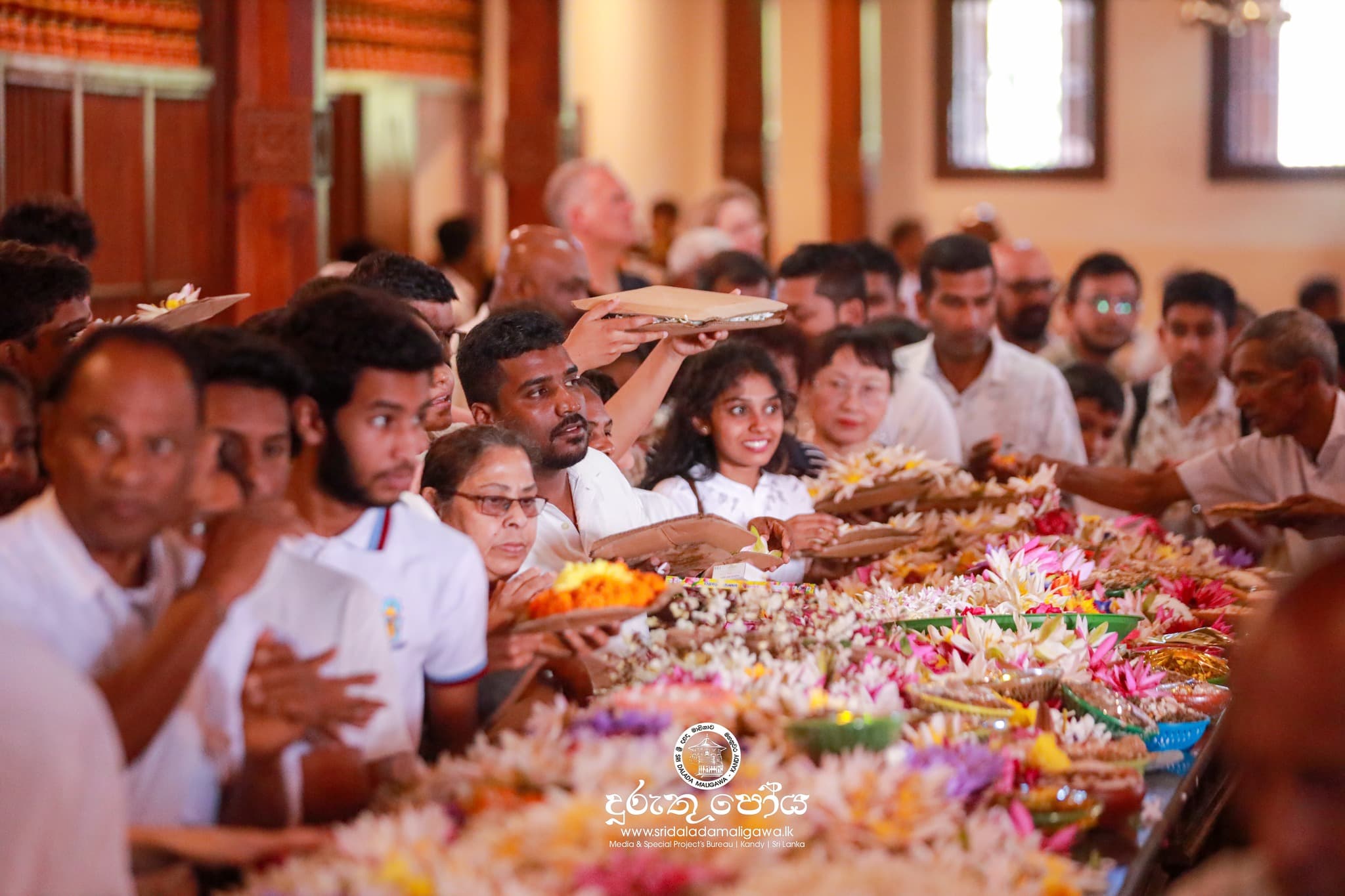
Morning puja at the Sri Dalada Maligawa — three services daily draw pilgrims from across the island.
Photo: Sri Dalada Maligawa Facebook Page
Wars Fought, Relics Lost
The history of the Tooth is not peaceful. It is the history of Sri Lanka told through a single object.
In 1560, the Portuguese captured what they believed to be the Sacred Tooth during their occupation of the coastal regions. In a public ceremony in Goa, the Archbishop ordered it ground to powder, burned, and the ashes scattered in the sea — a deliberate act of religious destruction designed to break the spiritual authority the relic held over the population.
Sri Lankans will tell you quietly, with complete certainty, that what the Portuguese destroyed was not the real tooth. That the real relic had already been hidden. That it survived.
Whether this is historical fact or the most resilient act of collective faith in the island's history is, in some ways, beside the point. The Tooth continued. The Portuguese did not.
The British, more pragmatic than the Portuguese, chose a different approach. When they defeated the last Kandyan king in 1815 and took control of the entire island, they formally assumed custodianship of the temple and the relic — effectively accepting, on their own terms, the ancient doctrine that whoever holds the Tooth holds the island. Even an empire found it easier to inherit the relic than to dismiss it.
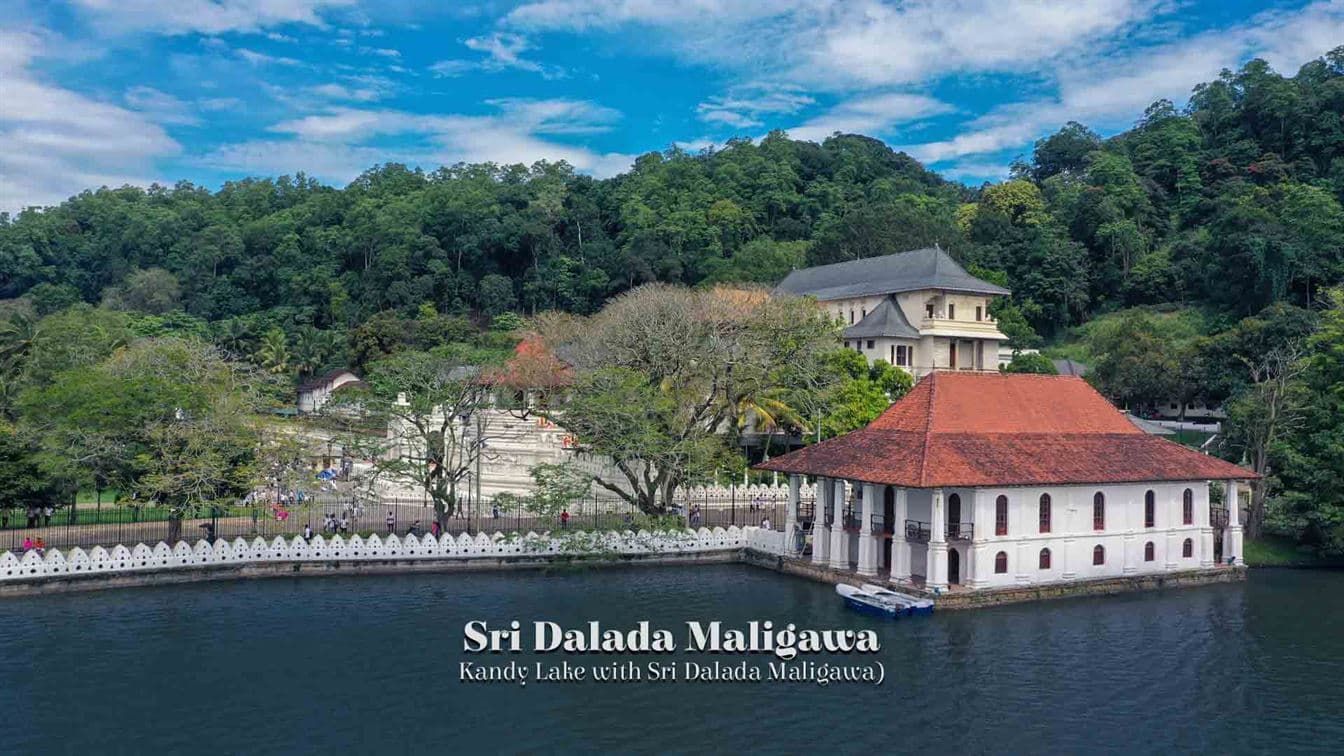
The Sri Dalada Maligawa reflected in Kandy Lake at dusk — the most sacred site in Sri Lanka.
Photo: Sri Dalada Maligawa Website
The Perahera — Once a Year, the Tooth Moves
For 364 days a year, the relic stays inside its seven caskets inside its locked shrine. But every August, during the festival of Esala, a golden replica casket is brought out and carried through the streets of Kandy on the back of the Maligawa Tusker — the most sacred elephant in the country.
This is the Esala Perahera. It is not a parade. It is a city collectively remembering what it is.
Over a hundred elephants, thousands of dancers and drummers, fire performers, whip-crackers and torch-bearers move through the streets for ten consecutive nights. The final procession can last five hours. The crowds number in the hundreds of thousands.
All of it — every drum, every flame, every elaborately costumed dancer — is in service of the casket on the elephant's back. Everything else is accompaniment.
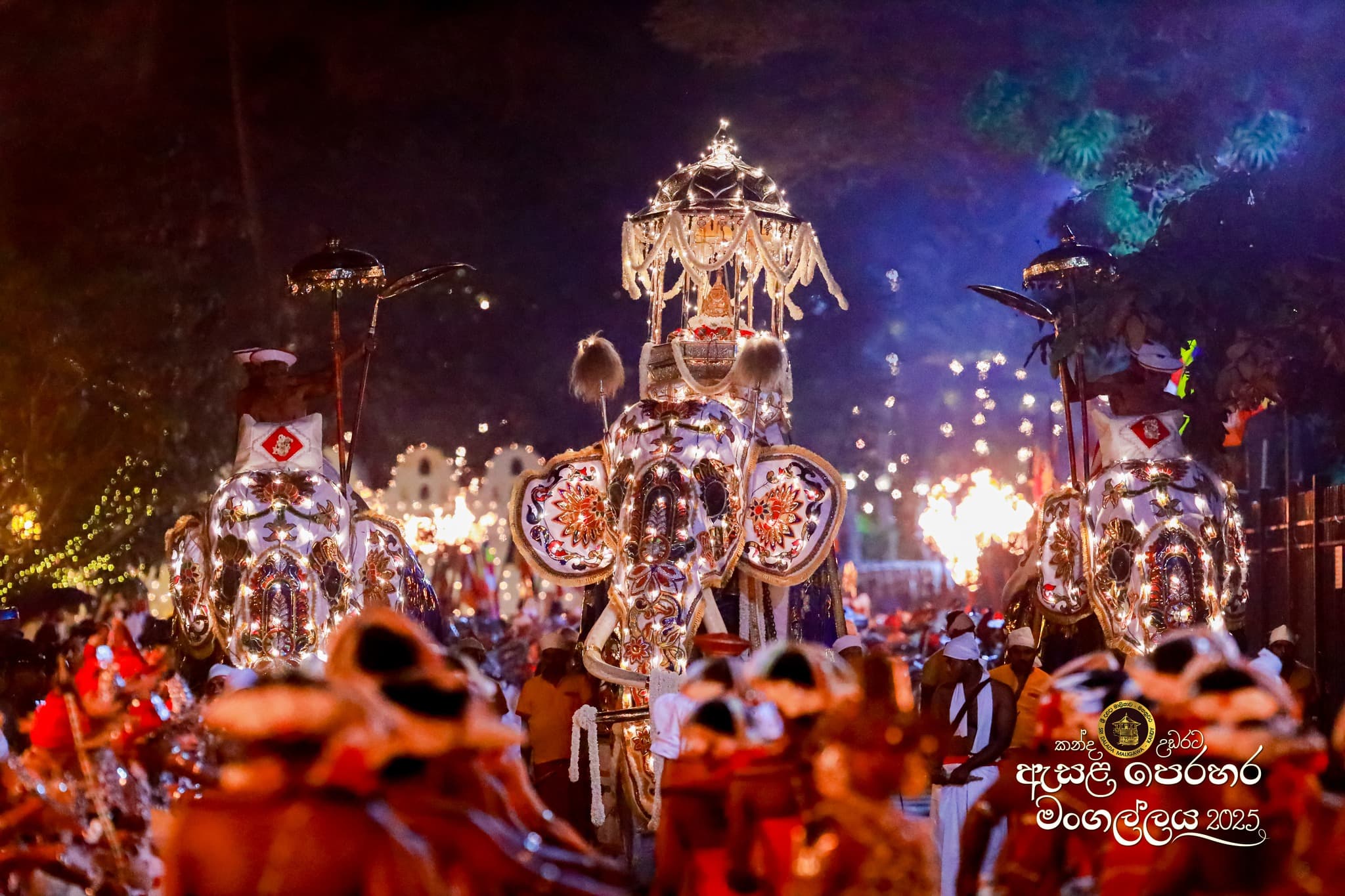
The Maligawa Tusker carries the golden casket through torchlit streets during the Esala Perahera.
Photo: Sri Dalada Maligawa Facebook Page
Visiting Today
The temple receives thousands of visitors every day of the year. It is an active place of worship, not a monument — which means the protocols matter.
When to visit
The early morning puja at dawn is the quietest and most atmospheric. Arrive before 6am. The evening puja draws the largest crowds but is also the most visually dramatic.
What to wear
White or light-colored clothing is customary and deeply respected. Cover shoulders and legs fully. Remove shoes before entering the inner temple.
What to expect
The inner shrine can become intensely crowded during puja hours. Move slowly. Follow the flow of pilgrims rather than trying to find a vantage point.
Beyond the temple
The Kandy city complex rewards a full day — the Kandy Lake, the National Museum adjacent to the temple, the covered market, and the surrounding hill walks. The town itself is compact enough to explore entirely on foot.
The Perahera
If your travel dates allow any flexibility, orienting your Sri Lanka itinerary around the Esala Perahera in July or August is one of the most significant travel decisions you can make. There is nothing else like it.
The Weight of Two Thousand Years
Most sacred sites in the world ask you to imagine what they once meant. The Sri Dalada Maligawa does not ask you to imagine anything. Walk in on any morning and the meaning is still being made — in real time, by real people, in the same way it has been made every single day for two thousand years.
The tooth you cannot see is the most visited object in Sri Lanka. The faith that surrounds something invisible is perhaps the most honest definition of what faith is.
Whatever you believe, you will leave the temple having felt the weight of something very old and very much alive.